Pacific Crest Youth Arts · Brand Story Workshop
What they were
fighting for.
Pacific Crest’s board and leadership all had different ways to explain the same organization’s work. Ahead of strategic planning, the team invited us to lead a story workshop and take a closer look. What emerged was one story they loved — and recognized themselves in.
From the workshop
You Belong Here.
But first,
the buses.
Money. Time. Buses. The needs of the performers. Different leaders had different ideas about what needed attention first.
We began by walking through the structure of a great story, putting Pacific Crest in the center of it. Define its goal. Name its villain. Consider what would happen if it disappeared.
The buses still mattered. We weren’t asking them to stop thinking about them. We wanted them to think what all that work was for.
We designed and facilitated the workshop over Zoom, joining board, staff and advisory members gathered for their retreat.
Six stories.
Something in common.
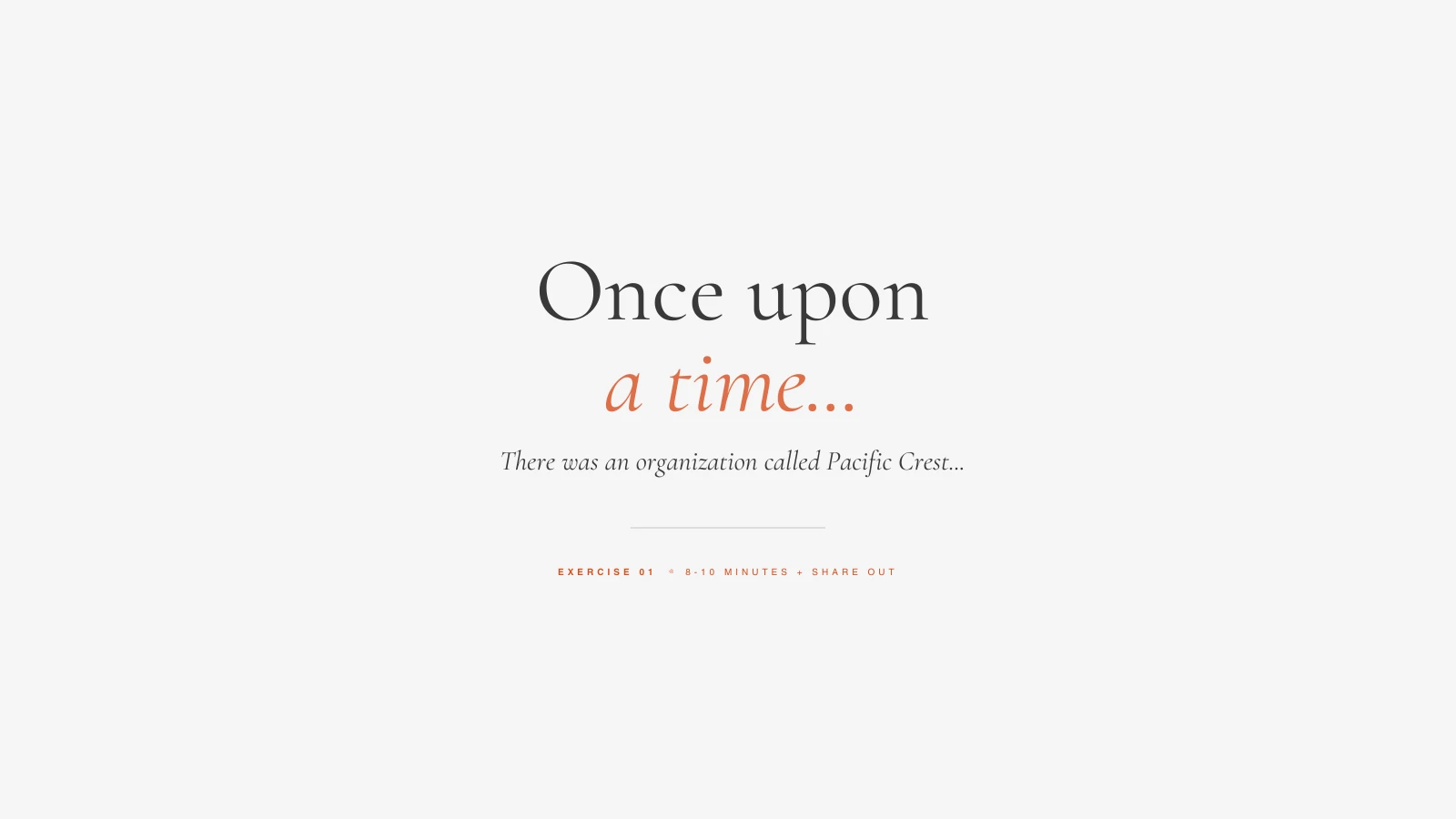
We broke the team into six groups, each beginning with the same prompt: “There once was an organization called Pacific Crest...”
None treated competitive placement as the main measure of success. They kept coming back to what happened to the young people. An organization known for its marching ensemble was describing belonging, confidence, grit and the people its students could become.
“You Belong Here” also gave them something to examine. Pacific Crest had been founded to provide young musicians with a better experience. Practices it had pioneered were now standard across the activity. The organization had helped change the world it entered. What did it need to take on now?
The discussion reached questions of access and affordability. A promise of belonging meant reckoning with who could afford to participate.
A different role
to play.
There were two stories to understand: Pacific Crest’s own, and the young musicians. Pacific Crest could lead the first. In the second, its job was to help someone else move forward.
From the Story Guide
For internal identity: Pacific Crest is the protagonist. For marketing: the student is. Know which story you’re telling.
We developed a 22-page story guide to carry that thinking forward. It brought together the findings, proposed language and questions leadership still needed to work through.
From the Story Guide · Page 13
“We serve youth through music”
“We equip young people to become bold leaders.”
Music was how they helped young people get there.
Inside the guide
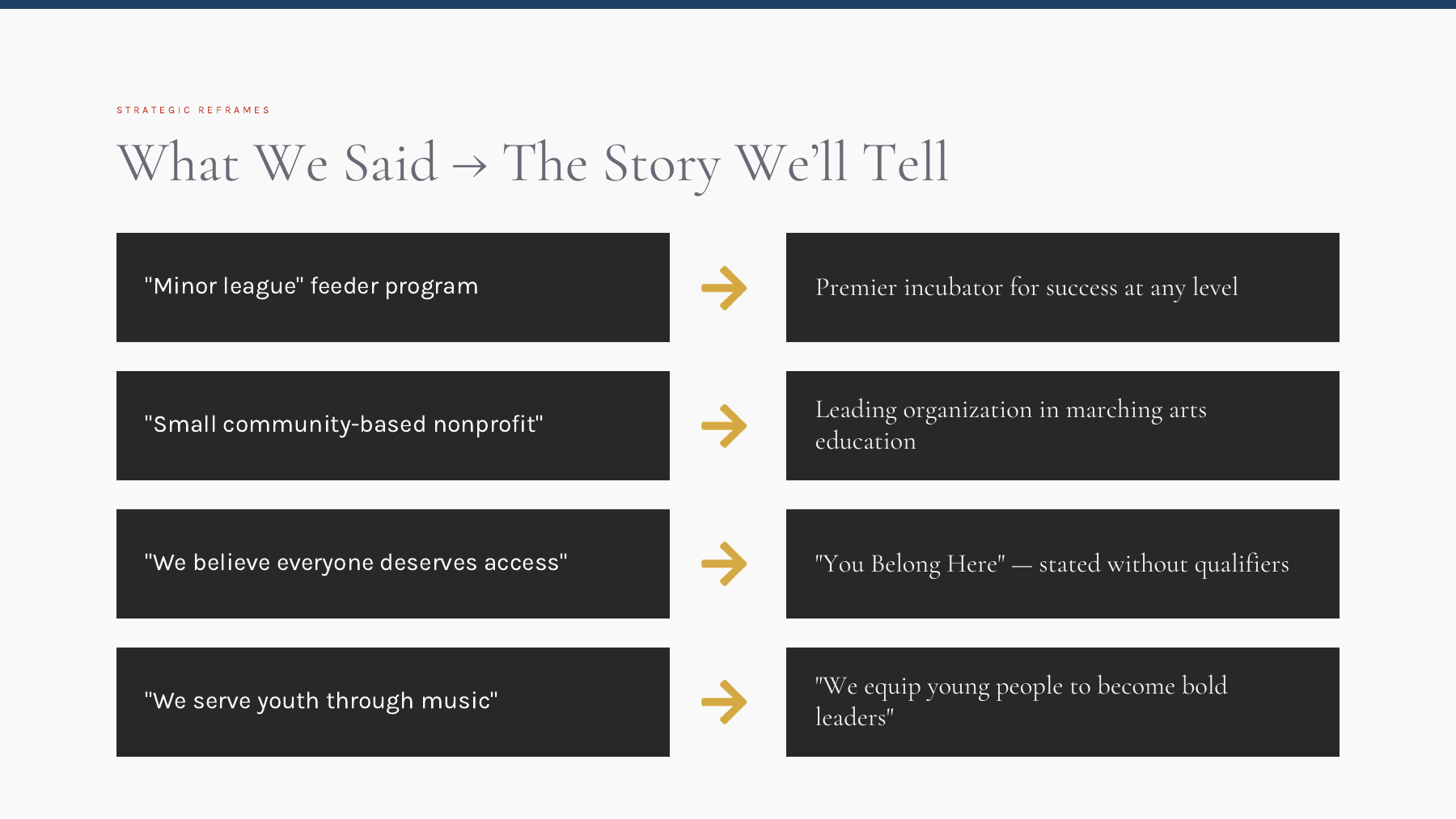
The guide kept those conflicts in plain sight: belonging and participation costs. Competition and education.
They hadn’t agreed on everything. But they left with a shared starting point, something worth working toward together — and a story they could return to when the conversation came back to money, time and buses.
Credits
- Client
- Pacific Crest Youth Arts
- Workshop design & facilitation
- Protagonist Ink
- Story strategy
- Patrick Kirkland
- Story exercises & synthesis
- Amy Kirkland